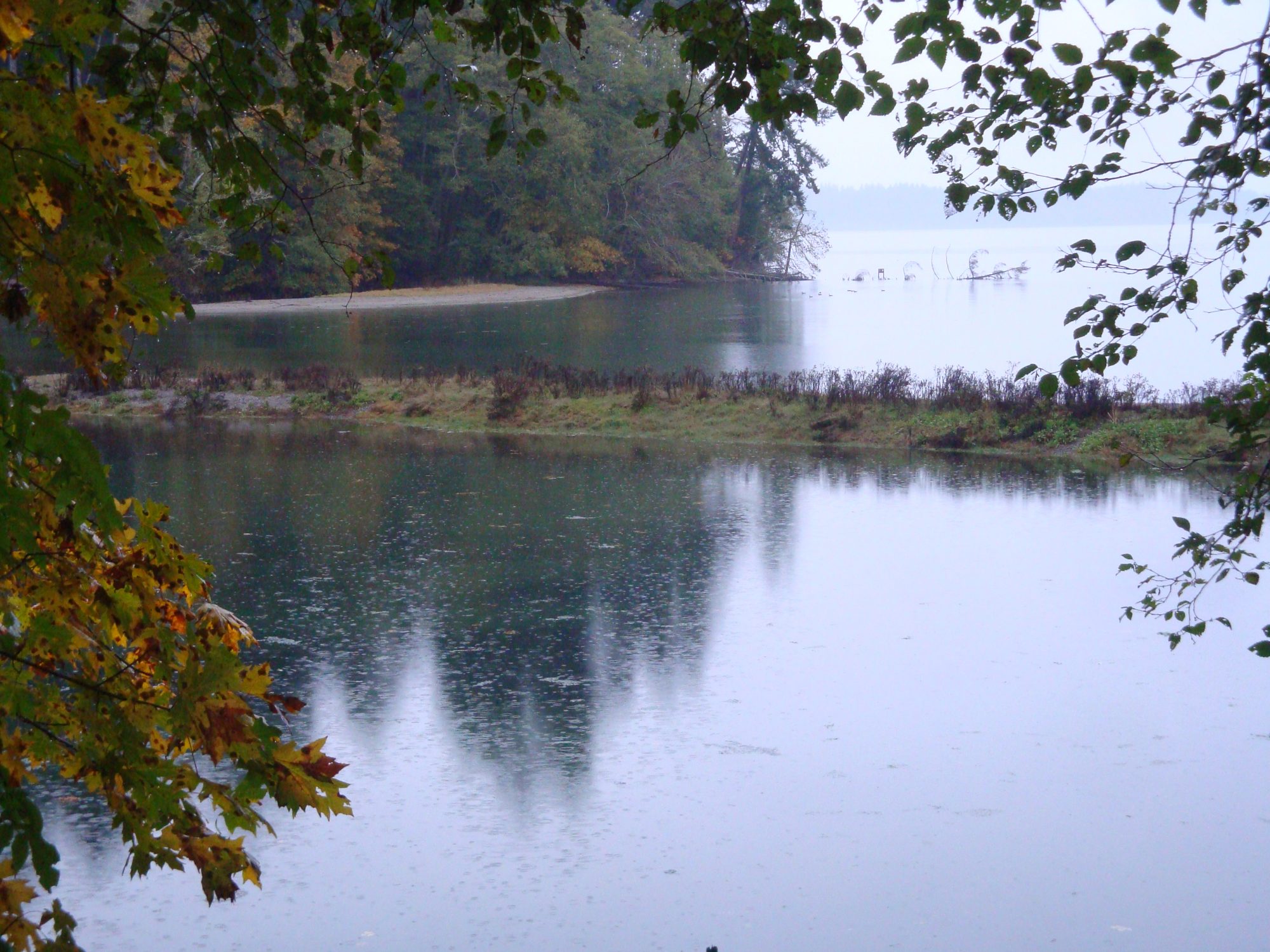
Budd Inlet lies at the southernmost end of Puget Sound. The estuary of the Deschutes River, the bay was once teeming with many thousands of birds and endless swarms of forage fish. Salmon smolts from throughout South Sound utilized its brackish waters for transition.
Budd Inlet is also the location of four major stream estuaries. Stream estuaries are an important and often overlooked feature in Puget Sound. Each was the location of a village for thousands of years prior to the arrival of “civilization”.
In the middle of the 19th century Americans arrived with machines capable of dominating natural systems. Many involved early on didn’t know the full impact of what they were doing. As time has passed, we do know what we’re doing. Sometimes we choose not to abide by what we know.
Today, watersheds that connect directly to the Sound rather than a river are heavily developed. If we want to see improvements in Puget Sound, we need to pay the adjoining lowlands ecoregion more attention. In the case of Budd Inlet we might say — yes the river is important but so are the streams.
Budd Inlet is divided down the middle into East Bay and West Bay. East Bay is the estuary of Moxlie Creek. It has the poorest water quality being low in dissolved oxygen and high in contamination. Governing bodies have written East Bay off, employing equivocation, the red herring and other logical fallacies.
The Port of Olympia which governs the inlet’s central peninsula claims to be “a vital economic engine and community partner, responsible for owning and operating a marine terminal, Swantown Marina & Boatworks, Olympia Regional Airport, and real estate properties throughout Thurston County. The Port is committed to sustainable practices, economic growth, and community engagement, ensuring a prosperous future for all of Thurston County.”
Sustainable practices? What activities are we wanting to sustain?
Salmon are heading up the Deschutes River. People gather at the dam to watch the spectacle. Things must be OK, just look at all the fish. Problem is, they’re mainly a combination of strays and hatchery fish. A significant native population was never established because of the waterfall at the base of the river. Each of the streams did have significant populations. Hatchery fish can spawn and temporarily establish naturalized or repeating runs but they typically fail to form a self-sustaining wild population over time.
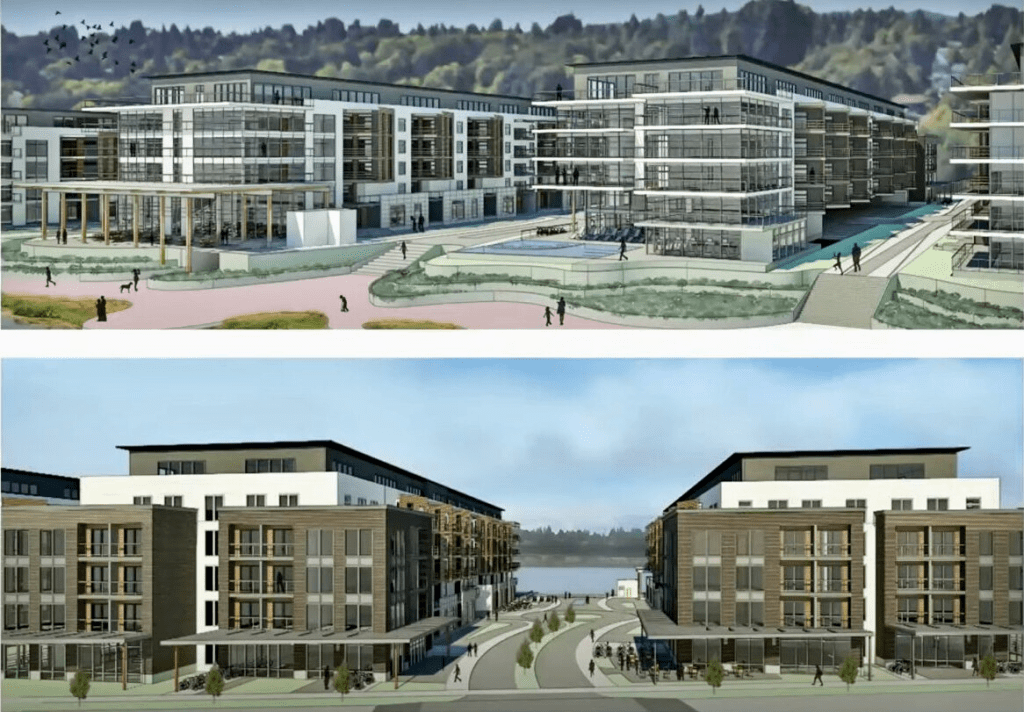
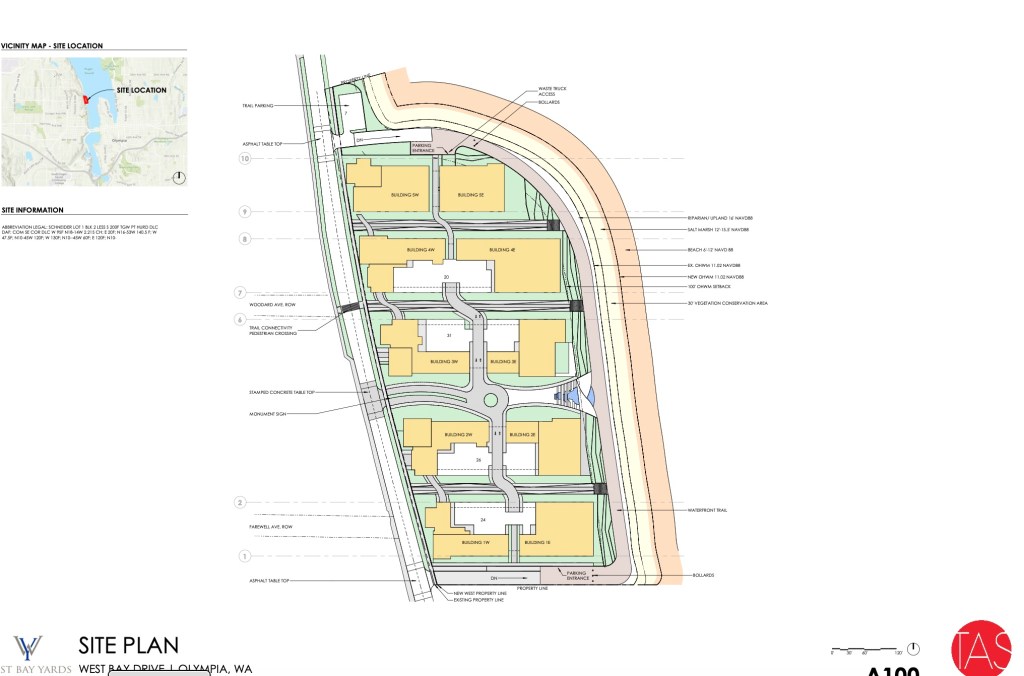
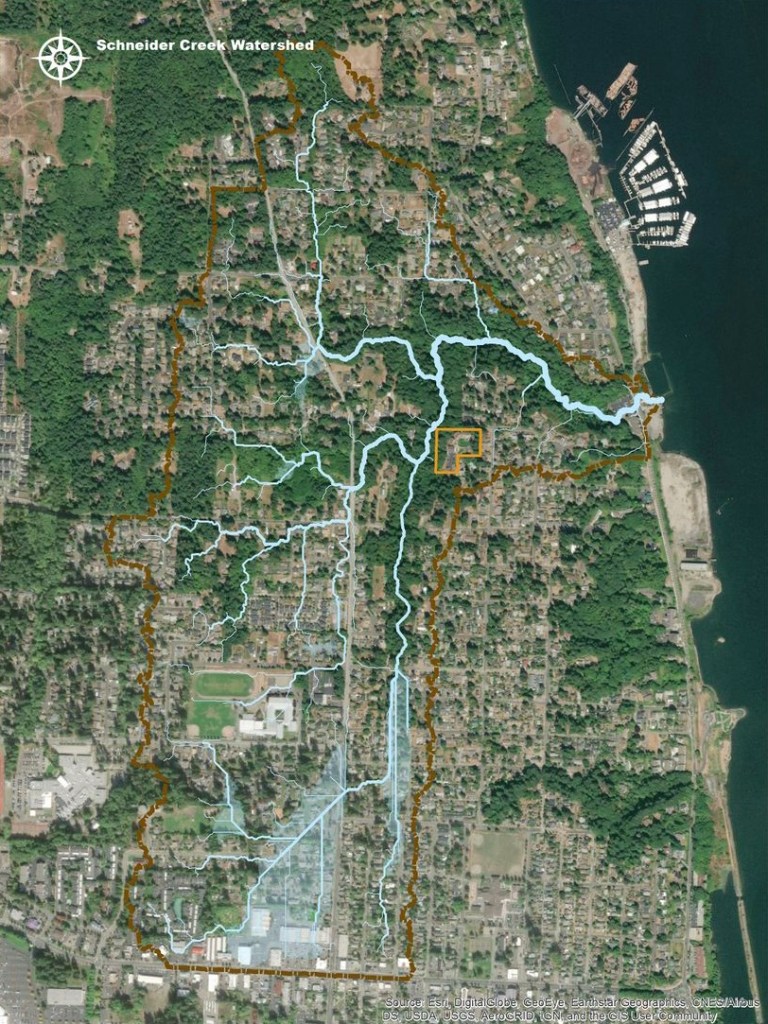
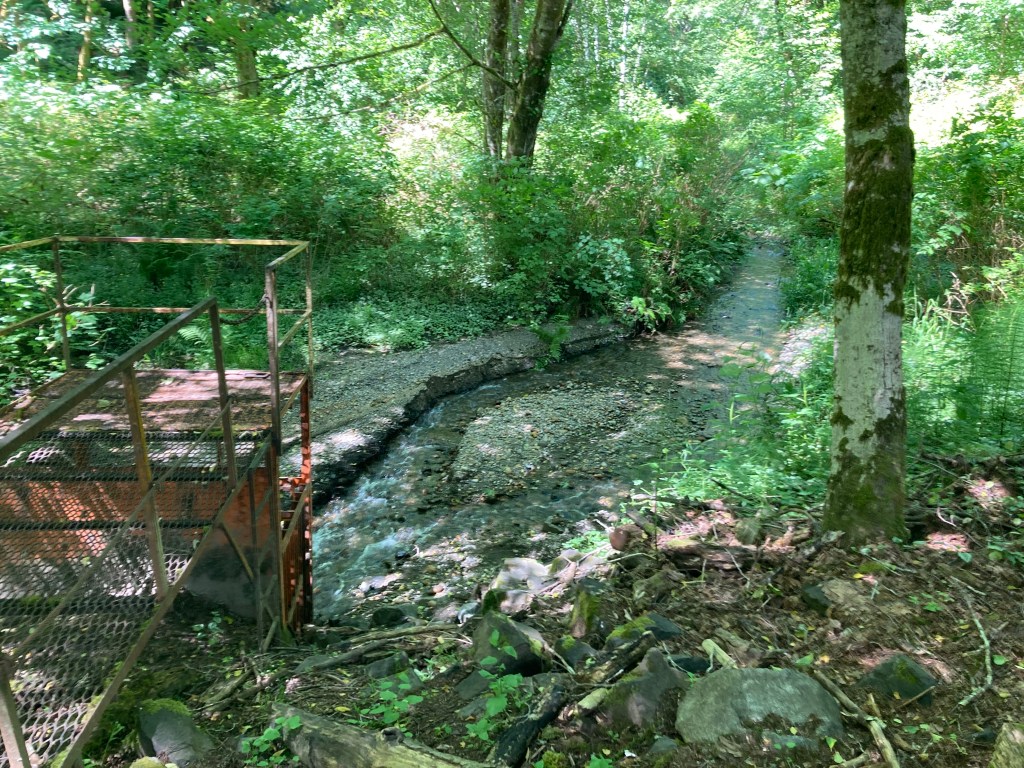
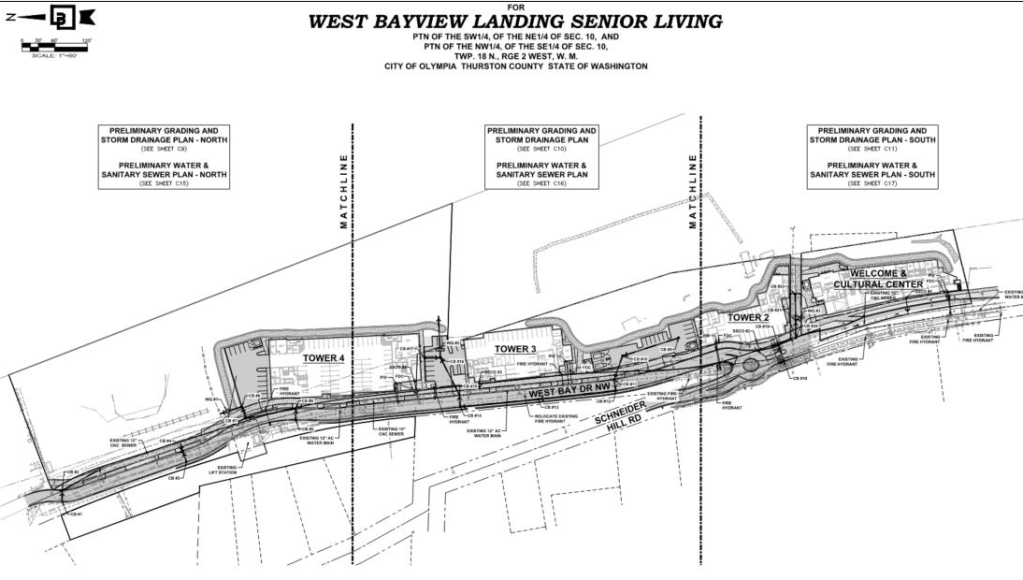
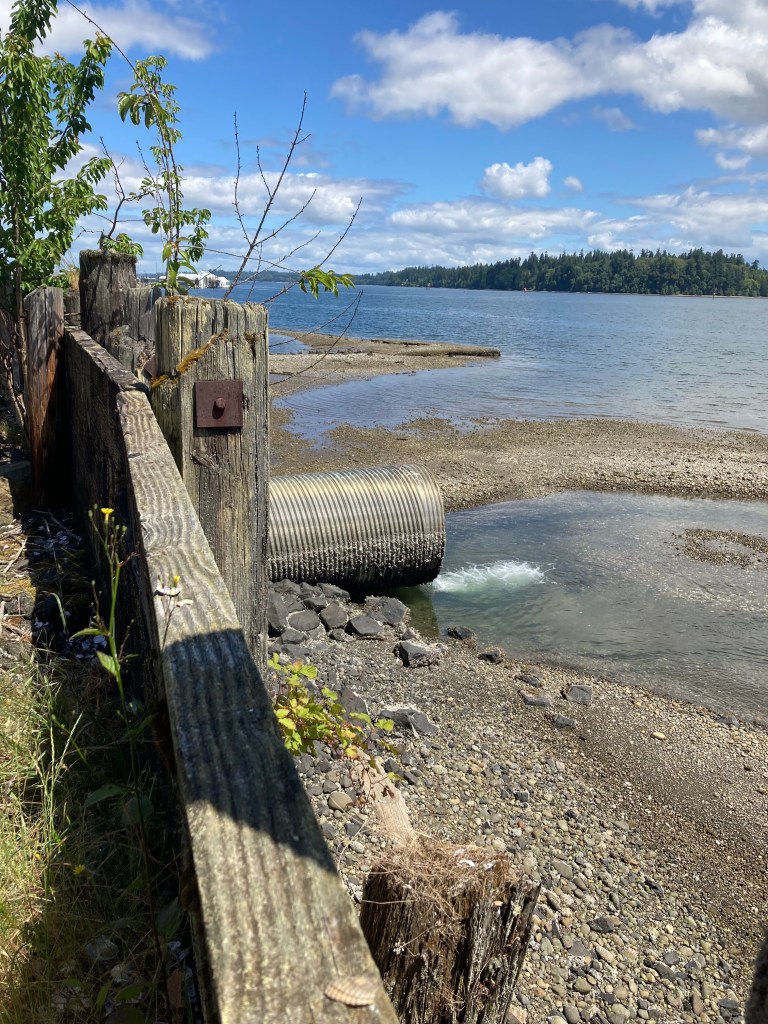
And they can have a negative impact. Hatchery raised salmon interbreed with wild fish. Captive breeding environments reduce natural instincts and genetic fitness. Hatchery fish compete with wild fish for food and space which can suppress native population numbers. There are wild populations at Schneider Creek, Moxlie/Indian Creek. Money has its eye on these places for development.
The Public Trust Doctrine has been violated. Does this even come into play today? What would be a violation of the Public Trust Doctrine? The question, takes us back to Roman Civil Law, to principles like “res communes” (things common to all), which declared that air, running water, the sea, and the shores of the sea were by natural law common to everyone. How would such a case be brought before which court?
The Port of Olympia governs the inlet’s central peninsula. The Port claims to be “a vital economic engine and community partner, responsible for owning and operating a marine terminal, Swantown Marina & Boatworks, Olympia Regional Airport, and real estate properties throughout Thurston County. The Port is committed to sustainable practices, economic growth, and community engagement, ensuring a prosperous future for all of Thurston County.”
Sustainability is often presented as an environmental goal. Or sometimes mitigation, trading damage here for no damage there. But not to lose heart. It’s becoming more apparent, day by day to one and all, that we have really screwed things up. People are sick of the dominant paradigm.
The Northwest Coast was densely populated for as many as ten thousand years prior to European arrival in the 18th century by people who managed to not screw things up. Folks practiced scientific methods. Observation, birds are circling. Hypothesis, there are baitfish down there. Test, take a dip-net out in your canoe. Conclusion, when you see birds and you want some fish that’s where they are, or aren’t. Endless application of these methods arrived at countless answers.
By contrast, scientific methods are rarely followed today. The study of oceanography — how are physical parameters effecting chemical and bilogical parameters? The study of ecology — What are the relationships between plants and animals in the environment in which they live? Where’s the truth? Where’s the proof?
Indigenous cultures stand by a deep respect for nature to the point of spirituality. All living things as well as those of land and water possess consciousness. The funny thing is, none of these ideas run contrary to what we’re learning, the deeper we look into our crystal ball at dark energy and quantum entanglement.
The Northwest Coast was densely populated when Europeans first made landfall in the 18th century. There were the Tlingit in British Columbia and Southeast Alaska, the Haida centered in the Queen Charlotte Islands or more correctly Haida Gwaii and the Salish into Central Washington. These groupings are arbitrary. There is tremendous overlap in culture and language and sub-groups within each.
The Haida term Haa Aaní (Our Land) is the belief that the land is alive and connected to the people. Humans are caretakers, using the land while respecting its spirit. A central figure in oral traditions, the raven is a trickster, creator and cultural hero who brought light to the world and shaped the environment. And there are primordial ancestresses, powerful figures like SGuuluu Jaad (Foam Woman) and Jiila Kuns (Creek Woman) tied to matrilineages. Matrilineal society is symbolized by the Eagle (or Wolf, depending on the region) and the Raven.
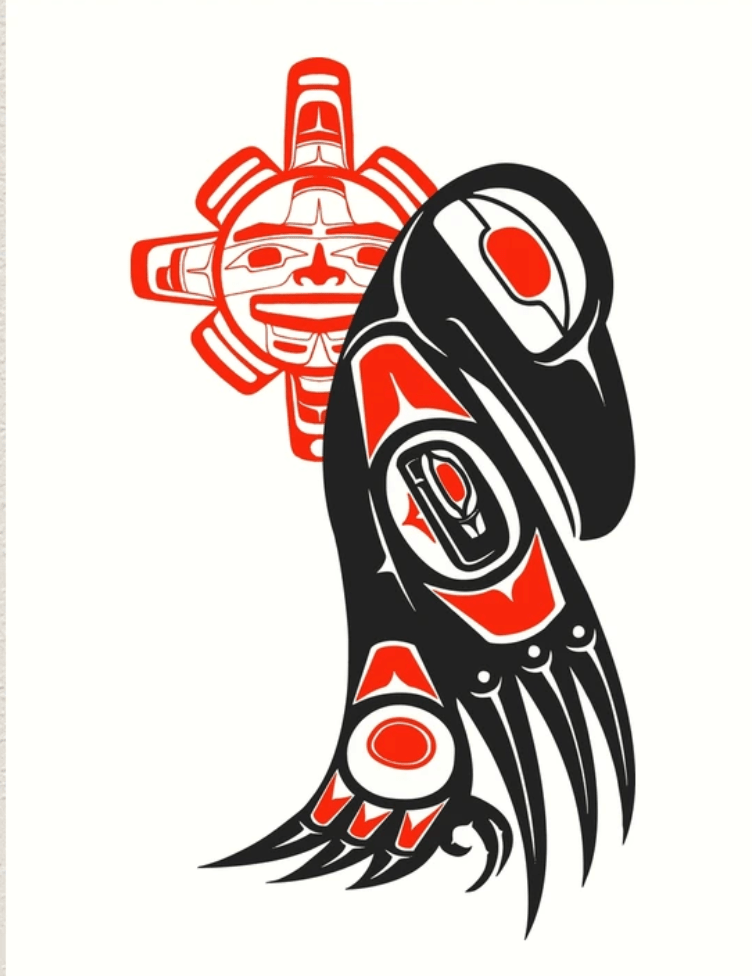
Painting by Berselalau
The term “Coast Salish” refers to a language family, including two dozen distinct languages. The Coast Salish-speaking peoples have lived in what is present-day western Washington and southwestern British Columbia for more than 10,000 years. Their geographic territory includes the lands bordering the Salish Sea—Puget Sound, the San Juan Islands, Gulf Islands, the Strait of Juan de Fuca, the Strait of Georgia—as well as the Pacific coast of Washington and northern Oregon, including what we now call Olympia.
The Tlingit, like their neighbors, have a rich culture based on fishing and art and a family system passed down through women. They believe that all living things have a spirit and are connected through universal consciousness. Their name means “People of the Tides”. They understand the importance of the tides, the mixing of salt and fresh waters, the estuaries and the necessary richness of life.
Every stream of any size was the site of a village. Although each was autonomous and sovereign by gathering regularly at potlatch get togethers to celebrate and exchange gifts, peace and harmony generally prevailed. These traditions extend down into Mexico where, for example, Bucerias and La Cruz celebrate Nuestra Señora de la Paz from January 16 to 24 every year, as they have since before Spain stepped in.
Around 1857 there was a war of sorts in Washington State and the first people were gathered up by the americans and imprisoned in concentration camps on Squaxin and Fox Islands. They were soon given reservation land to the west but some people returned to their homeland.
Winter villages, typically located at the mouth of a stream, had in some cases hundreds of citizens. Each tribal group has its own name for themselves. Many tribal names today, such as Tulalip and Muckleshoot, refer to reservations where people from different tribal groups have come together to live.
The predominant watershed in East Olympia is Indian Creek. The origin of the name? There’s a good chance it was a sizable native village continuing well into American settlement. Indian Creek flows into Moxlie Creek. The estuary of both is East Bay.
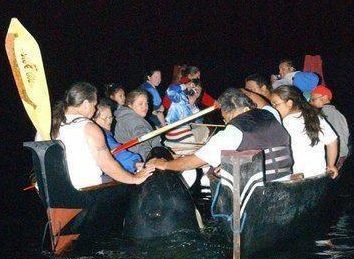
Crows, ravens and jays will make friends with you. And black bears too. Not to mention marine mammals. Nature can be a friendly place.
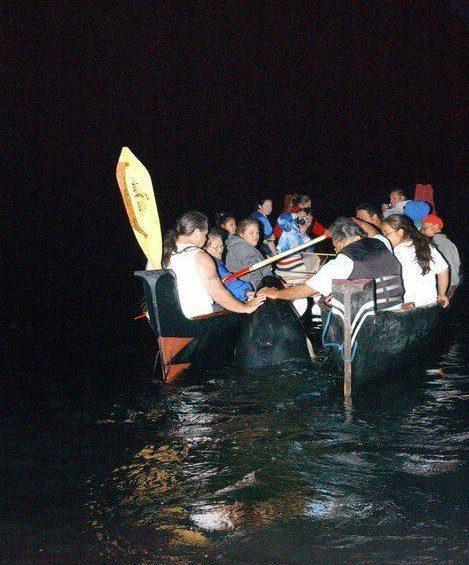
Photo by Kelli Williams and Connie Wagoner.
Ron Seacrest, who grew up at the mouth of Schneider Creek in the 1930s, told in an interview of a native family living in Schneider Creek valley into the 20th century. Settlers believed they could own the land. They built fences around what they owned. The two systems simply couldn’t co-exist. That doesn’t mean all newcomers were or are intent on destroying the earth’s ability to support human life.
October 4th of 2026 was Francis of Assisi’s 800th birthday. Francis believed that the world was created good and beautiful but suffers because of human sin. In the Canticle of the Sun, he gives God thanks for Brother Sun, Sister Moon, Brother Wind, Water, Fire and Earth. Accounts of Francis’ life reflect great love for animals and the environment.
In November of 1979 Pope John Paul II declared Francis the patron saint of ecology. On 28 March 1982, John Paul II stated that Francis’ love and care for nature is a reminder “not to behave like dissident predators where nature is concerned, but to assume responsibility for it, taking all care so that everything stays healthy and integrated, so as to offer a welcoming and friendly environment even to those who succeed us.”
In 2015, Pope Francis published his encyclical letter Laudato si’, about the ecological crisis and “care for our common home”, which takes its name from the Canticle of the Sun, which Francis of Assisi composed. It presents Francis of Assisi as “the example par excellence of care for the vulnerable and of an integral ecology lived out joyfully and authentically”. He was known for talking to birds.
The Vatican has officially declared environmental destruction a ”sin against creation and the Creator” in a major new doctrinal text. The 29,000-word document, titled Caring for Our Common Home, elevates ecological concern from a merely political or scientific issue into a matter of personal faith. Authorized under Pope Leo XIV, the text declares that destroying natural habitats, polluting, and exploiting resources are not just civic failures, but a ‘sin against creation and against the Creator’ that directly violates God’s plan.
This shift from Pope Francis’ earlier concept of ‘ecological sin’ to a more explicit ‘sin against the Creator’ is designed to reshape how believers view their daily environmental impact. The Vatican emphasizes that failing to safeguard the planet severely harms the poorest populations and future generations, distorting the core relationships that define humanity. By placing ecological action squarely in the realm of moral responsibility, the Church is challenging millions of people to treat environmental care as a fundamental requirement of their faith.
Under Belgian law, as of September of 2026, ecocide is now treated with the same gravity as genocide and warcrimes, thanks to an overhaul of the country’s Criminal Code. Mass environmental destruction (ecocide) is placed among the code’s gravest crimes. When environmental damage is serious, widespread and long-term, we are approaching the gravity associated with crimes against humanity. It follows the same logic as genocide, crimes against humanity and war crimes”.
In our representative democracy business is represented by the Republican Party and labor by the Democratic Party. Both favor industry and development for their own reasons. Can either do right by Mother Earth?
In the 1960s California’s Marin County was facing projects such as the planned Marincello development, originally conceived to house 20,000–30,000 people in 50 apartment towers, as well as hundreds of homes and townhouses. There would be a mall and a grand hotel at the highest point of the headlands overlooking the Golden Gate.
There was a planned freeway from the Golden Gate Bridge to West Marin and up the Sonoma Coast. The freeway would destroy Bolinas Lagoon and Tomales Bay. A coalition of local organizations including the Marin Conservation League formed in resistance. Legislative efforts of cosponsors Congressman William S. Mailliard (R-San Francisco) and Congressman Phillip Burton (D-San Francisco) helped. In 1972, President Richard Nixon signed into law “An Act to Establish the Golden Gate National Recreation Area”. The bill allocated $120 million for land acquisition. To complete the project the Nature Conservancy purchased the land in the Marin headlands that made up the forthcoming Marincello development from the Gulf Oil Corporation and transferred the land to the Golden Gate National Recreation Area.
Green Gulch is a beautiful valley near Muir Beach. The Coast Miwok referred to it as Big Lagoon. That’s an English translation. A coastal lagoon is a form of estuary in which littoral drift of sand typically closes the mouth in summer and rains open it in winter. The land evolved over time to a 19th-century dairy ranch and farm.
In 1972 the Green Gulch Farm was purchased from rancher and Polaroid co-founder George Wheelwright in a below-market arrangement with the help of The Nature Conservancy and the Green Gulch Farm and Zen Center was established. That same year, 1972, Deep Ecology was unveiled by Norwegian philosopher Arne Næss. Deep Ecology argues that all living things have inherent worth regardless of their use to humans. It implores society to move away from a human-centered view and adopt a lifestyle that respects the whole natural world.
Pulitzer Prize winning poet Gary Snyder hangs out at Green Gulch. The emphasis on watershed restoration, organic agriculture and living in place mirrors the bioregional and nature-centered philosophy that defines Snyder’s poetry and essays. British philosopher Alan Watts’ ashes are scattered there. Peter Coyote frequently gives dharma talks and teaches at Green Gulch. A “lost prophet of the wilderness”, he was a key founding member of the Diggers, a radical anarchist and theatrical counterculture collective active in San Francisco’s Haight-Ashbury neighborhood from 1967 to 1975. Named after the original 17th-century English Diggers, the group sought to create a society free of capitalism.
https://www.britannica.com/topic/Northwest-Coast-Indian
https://thecanadianencyclopedia.ca/en/article/coastal-salish
https://www.britannica.com/topic/Tlingit
https://en.wikipedia.org/wiki/Philosophy_and_religion_of_the_Tlingit
https://www.redbubble.com/i/art-print/Haida-Tlingit-Native-by-Berselalau/90198577/wqnt
(footnote) Northwest Coast groups can also be classified into four units or “provinces.” The northern province included speakers of Tlingit, Haida, Tsimshian, and the Tsimshian-influenced Haisla (northernmost Heiltsuq or Kwakiutl). The Wakashan province included all other Kwakiutl, the Bella Coola, and the Nuu-chah-nulth. The Coast Salish–Chinook province extended south to the central coast of Oregon and included the Makah, Chinook, Tillamook, Siuslaw, and others. The northwestern California province included the Athabaskan-speaking Tututni-Tolowa as well as the Karok, Yurok, Wiyot, and Hupa.
The Kwakiutl, or Kwakwaka’wakw, are an Indigenous First Nations people of the Pacific Northwest Coast (Desolation Sound). They traditionally inhabit the northeastern region of Vancouver Island, adjacent British Columbia mainland areas, and surrounding islands. The name “Kwakiutl” originally referred to a single specific band, but historically was used by outsiders to describe the broader group of Kwak’wala-speaking tribes
Long stretches of coast consist of uninhabitable cliffs rising from the sea.