The primary chemical of concern in Budd Inlet is dioxin, a legacy of preserving pilings. Concentrations at the head of East Bay exceed 200 ppt in surface layers and 1000 ppt in subsurface layers. The standard for open water disposal is 3.5 ppt. For MTCA cleanup sites 11 ppt.
Dioxin is probably the most biologically damaging non-radioactive chemical known. Its effects can be quantified in parts per trillion. These include cancer, birth defects and endocrine disorders.
The term dioxin actually refers to a group of chemicals. By definition we’d begin with the simple chemical compound C₄H₄O₂, furans being C₄H₄O. In the toxic forms, polychlorinated dibenzodioxin and polychlorinated dibenzofuran, one or more hydrogen is replaced with chlorine. The EPA calculates toxic equivalency (TEQ) values for each member of this category where the more toxic TCDD is expressed as 1.0 and less toxic as fractions.
Budd Inlet is also contaminated with PCBs, polychlorinated biphenyls, which also have a chemical structure made up of carbon, hydrogen and chlorine. Chlorine is a halogen, the second from the right column on a periodic table. Other halogens include bromine and fluorine, chemicals we find in fire retardants and fire fighting foam and food packaging. All of these chemicals are similar in structure and can pose similar risks. They can damage the double helix. Sometimes referred to as forever chemicals they don’t exist in nature and nature is very poor at breaking them down. They have a “common spectrum of responses”… they work together and their cumulative toxicity should be considered as a group.
Dioxin is lipophilic, attracted to fats. Human skin is fatty. It’s why we leave fingerprints. Dioxin will tend to adhere to skin and let go of soil. The primary method of testing dioxin toxicity is applying it to the back of a rat. It’s easily absorbed through skin. The public has been reassured that most people are exposed through their food. The reason more people aren’t exposed by wading in contaminated mud is because people rarely do that. The risks to anyone who does are significant.
Consultants have convinced local governments that surface layers are assessed separately because they are what’s biologically availability. The bioactive zone in Puget Sound is actually between a foot and a meter deep, depending on whether geoducks are present. Sedimentation occurs in layers, the surface layers being the most recently laid down. Surface sediment contamination tells us that dioxin continues to enter Budd Inlet from uncontrolled sources, almost certainly on land.
Dioxin in the marine environment moves up from species to species and concentrates in apex predators. The latest orca death was a male in the prime of life. One suspected cause of death was cancer, one of the potential effects of these chemicals. An international team led by Jean-Pierre Desforges, a postdoctoral researcher at Aarhus University, determined that several orca populations worldwide are at risk of collapse in coming decades because of the accumulation of PCBs in their body burden.
Lakota visionary and healer Black Elk supposedly stated that we don’t need to heal the earth, she can heal herself. All we have to do is quit making her sick.
Concerning the Budd Inlet Cleanup, generally described as dredging up contamination and burying it or taking it away, there’s another option, natural attenuation.
The primary chemical of concern in Budd Inlet is dioxin, which is actually a family of chemicals with similar structures, being built around chlorine. Chlorine typically exists as a Cl₂ molecule, where two chlorine atoms are bonded but it can also exist as individual highly reactive chlorine atoms in certain contexts. Dioxin biodegradation primarily occurs through the enzymatic action of specialized bacteria or fungi, which break down persistent organic pollutants into less toxic compounds. Aerobic degradation involves oxidative pathways while anaerobic degradation relies on reductive dechlorination to remove chlorine atoms.
Dioxins are not considered biodegradable in the conventional sense; they are classified as persistent organic pollutants (POPs) that break down very slowly in the environment, although some very slow biodegradation processes do occur over long periods, particularly through microbial action. Sunlight (photolysis) is a more rapid degradation process than biodegradation.
Photodegradation is the breakdown or change in materials caused by the absorption of light, particularly ultraviolet (UV) radiation. Photodegradation can be a beneficial natural process, aiding in the breakdown of organic matter. A substance must absorb light energy (photons) to undergo photodegradation. The absorbed light energy can break chemical bonds within molecules, initiating the process, often resulting in the formation of reactive species like free radicals. These reactive intermediates can then trigger further chemical reactions, such as oxidation.
Biodegradation is the natural process where organic materials are broken down into simpler, harmless components, like water, carbon dioxide, and nutrients, by living organisms such as bacteria. Typically microorganisms release enzymes which break down complex organic molecules in the material into smaller, simpler pieces which are then consumed as a source of energy and nutrients which through metabolic processes are converted into simpler products, such as carbon dioxide, water, and new biomass. The end products are typically non-toxic and can be reabsorbed into the environment
Bioaccumulation is the gradual buildup of chemicals or contaminants in a living organism where the substance is absorbed and stored faster than it can be metabolized or excreted. This process often involves fat-soluble chemicals including persistent organic pollutants (POPs), which are not easily broken down by the organism. The effects are often amplified by biomagnification, where concentrations increase at each successive trophic level of the food chain. The accumulation of these substances, especially in top predators like large fish and humans, can pose risks to health.
Aerobic degradation is process wherein aerobic bacteria introduce oxygen into the dioxin molecule’s ring structure.
In a process called enzymatic dehalogenation, enzymes cleave chlorine atoms from the dioxin structure, breaking the molecule’s resistance to degradation and reducing its toxicity. Anaerobic degradation is a process wherein anaerobic bacteria remove chlorine atoms from highly chlorinated dioxins converting them into less chlorinated, more readily degradable compounds.
Bioremediation can include processes such as composting which leverages microbial activity to degrade dioxins. Bioaugmentation introduces cultured microorganisms with dioxin-degrading capabilities to a contaminated site.
Biostimulation enhances the activity of indigenous microbial communities by providing them with optimal conditions, such as nutrients, to accelerate the degradation process. Phytoremediation utilizes plants with large biomass and strong adsorption capabilities to remove dioxins from the soil.
The misapplication of scientific methods in an attempt to dominate nature, an attempt that will surely fail. The phrase, often attributed to Lakota holy man Black Elk, states: “We don’t have to heal the Earth, she can heal herself. All we have to do is stop making her sick”. This wisdom suggests that the Earth possesses an inherent capacity for self-recovery if humanity ceases to cause harm and disrespect its natural rhythms. The message also implies a reciprocal relationship, where a healthier Earth can, in turn, heal and balance humanity
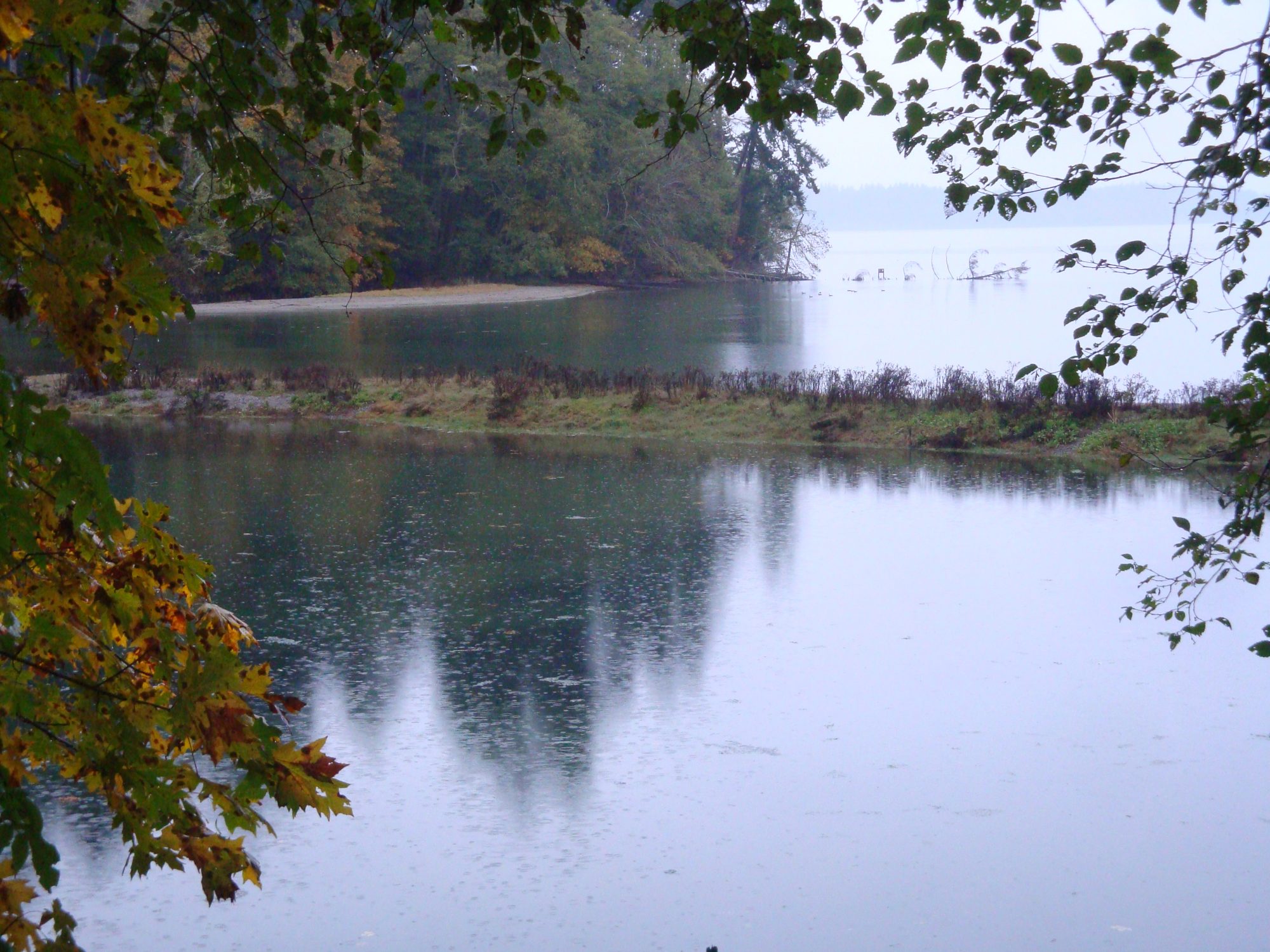
Budd Inlet is surrounded by natural beauty. Mount Rainier, the Cascades and the Olympic Range are reflected in the waters lined with abundant life. But the beauty is a far cry from what once was, in some cases not that long ago. If we recognize that we have a problem, we can surely find solutions.
We have bioremediation done by bacteria and fungi. We can enhance these functions with varying effectiveness. There’s also photo-degradation which seems to be the best. Exposing chemicals to sunlight… on or near the surface. This is also the bioactive zone, the zone where plants and animals live. There’s shared space and a shared objective here. The shallow zone effected by sunlight and bacteria and the shallow zone where plants and animals live is the same zone. Sunlight and bioremediation fix the zone in which plants and animals live. If our goal is to avert the entry of toxic chemicals into the web of life we might consider not stirring things up by dredging and such. That’s of course after we’ve identified and controlled the sources.
Just leave it alone and give nature a chance. If we want to dredge channels and berths for vessels, let’s make it clear what the motivation is. This is not a cleanup. It’s the opposite.
 Garden Bay